Compression Socks for Nurses: Which Level Do You Need?
, by Monicah, NP , 2 min reading time
, by Monicah, NP , 2 min reading time
8–15, 15–20 or 20–30 mmHg? Here's what compression levels mean and how to choose compression socks for long nursing shifts.
Ask a room full of nurses how they get through back-to-back twelves, and compression socks will come up fast. Standing and walking for hours can leave your legs feeling heavy, tired and swollen by the end of a shift. Graduated compression socks are one of the simplest things many healthcare workers add to their routine.
But the numbers on the package — 15–20, 20–30 mmHg — can be confusing. Here's what they mean.
mmHg (millimeters of mercury) measures how much pressure the sock applies. Graduated compression socks are tightest at the ankle and gradually looser up the leg, which is designed to support blood flow back toward the heart.
For most healthcare workers looking for everyday support on long shifts, 15–20 mmHg is a common starting point. It's firm enough to feel supportive but comfortable enough to wear for a full shift.
If you have a circulation problem, diabetes, peripheral artery disease, a history of blood clots or another medical condition, talk to your healthcare provider before wearing compression — and ask which level is right for you.
Compression only works if the sock fits. A sock that's too loose won't provide the intended pressure, and one that's too tight can be uncomfortable. Check the brand's size chart and measure your calf and shoe size before ordering. (Here's our compression sock size chart.)
Compression socks look sharpest with jogger scrub pants, which show off the sock instead of bunching over it. Choose a color that matches or contrasts your scrubs for a pulled-together look.
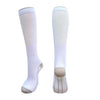
Shop our 15–20 mmHg Compression Socks in black, gray, white and navy — free US shipping on orders over $50.
This article is for general information and isn't medical advice. Talk to your healthcare provider about what's right for you.